
Day 8 - Strategic Judgement


Today's challenge:
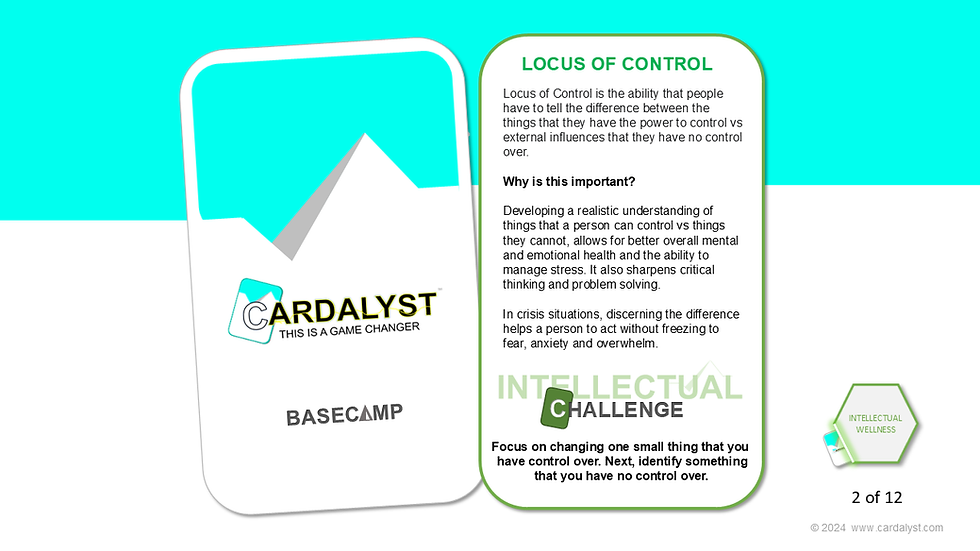
Focus on one thing that currently stresses you out. What can you control? What is beyond your control? Ignore what you can't control and take a small step to improving what is in your power to act upon or change.
What is this?
Strategic judgment is knowing what matters most, what action will have the greatest long-term impact, and when to act.
Why is it important?
1. It Helps You Focus on What Truly Matters
Many people are busy. Strategic people are effective.
Strategic judgment allows you to distinguish between:
Urgent vs. important
Noise vs. signal
Short-term gains vs. long-term success
Without it, people often chase distractions or react to circumstances instead of shaping them.
2. It Improves Leadership
Leaders constantly face difficult choices:
What should we prioritize?
Where should we invest resources?
Which opportunities should we pursue?
Which risks should we accept?
Strategic judgment helps leaders make decisions that serve the mission rather than their emotions or impulses.
3. It Reduces Costly Mistakes
Poor judgment often comes from:
Acting too quickly
Acting from emotion
Ignoring consequences
Focusing only on the present
Strategic judgment encourages reflection before action.
4. It Builds Resilience
Life rarely goes according to plan.
People with strategic judgment:
Adapt quickly
Reassess situations
Learn from failure
Adjust course without abandoning objectives
They understand that strategy is not rigid planning but informed adaptation.
5. It Creates Greater Long-Term Impact
Many successful people are not necessarily smarter than others.
They consistently make better decisions over time.
What are some things you can do to leverage locus of control ?
1. Ask Better Questions
Instead of: What do I want right now?
Ask:
What outcome am I trying to create?
What happens if I do nothing?
What are the second- and third-order effects?
2. Study History
History is essentially a library of strategic decisions.
Study:
Great leaders
Military campaigns
Business successes and failures
Political movements
You begin recognizing recurring patterns.
3. Seek Diverse Perspectives
Strategic thinkers deliberately challenge their own assumptions.
Ask:
What am I missing?
What would someone who disagrees with me say?
4. Reflect Regularly
After major decisions ask:
What worked?
What didn't?
What assumptions were correct?
What assumptions were wrong?
Reflection converts experience into wisdom.
Deep Dive

"Thinking in Bets", by Annie Duke
Annie Duke is a poker champion turned business consultant. She teaches you how to get comfortable with uncertainty and make better decisions as a result. Strategic judgment is often less about finding certainty and more about making the best decision possible with incomplete information. Duke explains this better than almost anyone.

Waypoint:
"It is not enough to be busy; so are the ants. The question is: What are we busy
about?" - Henry David Thoreau

Comments