
17 - Empathy
- Steve Carle

- Jul 27
- 2 min read
Updated: 23 hours ago

Today's challenge;
Find an opportunity to entertain a different viewpoint or put yourself in someone else’s shoes.
What is it?
Empathy is the capacity to understand or feel what another person is experiencing from within their frame of reference, that is, the capacity to place oneself in another's position.
There are three ways of looking at empathy;
Affective empathy. This is the ability to share the emotions of others.
Cognitive empathy. Is the ability to understand the emotions of others.
Emotional regulation. This refers to the ability to regulate one’s emotions.
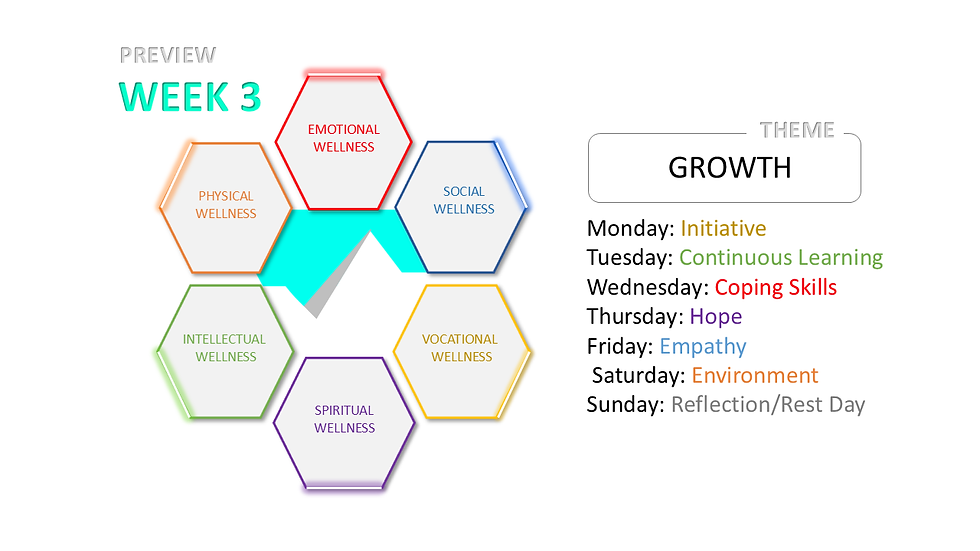
As you can see, it ties very closely to social and emotional wellness. Improving your empathy has many positive effects on your overall wellness.
Why is it important?
Empathy is important because it helps us understand how others are feeling so we can respond appropriately to the situation. It is typically associated with social behaviour and there is lots of research showing that greater empathy leads to more helping behaviour. Becoming more empathetic makes us better partners, friends, parents, and leaders.
How can you become more empathetic?
Empathy is a skill that can be learned and improved upon.
Maintain eye contact. Look at the person while you are communicating with them. If you appear distracted, the other person does not feel like you are listening nor care about what they are saying.
Body language. Mirroring the emotions of the person you are talking to and having an open body posture will help the other person feel at ease and improve communication.
Listen. You are trying to learn and understand what the person is experiencing. You can't hope to support or help anyone if you skip this step.
Educate yourself. Before you offer an opinion you should take the time to learn all the facts.
Deep Dive

"Empathy: Why It Matters and How to Get It", by Roman Krznaric.
This book is widely regarded as one of the best practical introductions to empathy. Krznaric combines psychology, neuroscience, storytelling, and real-world exercises to explain how empathy works and how to strengthen it in everyday life. He outlines the "six habits of highly empathic people" and shows how empathy can improve relationships,
leadership, creativity, and social understanding.

Waypoint:
“Empathy is walking a mile in someone else’s moccasins. Sympathy is being
sorry their feet hurt.” – Rebecca O’Connell
Comments